
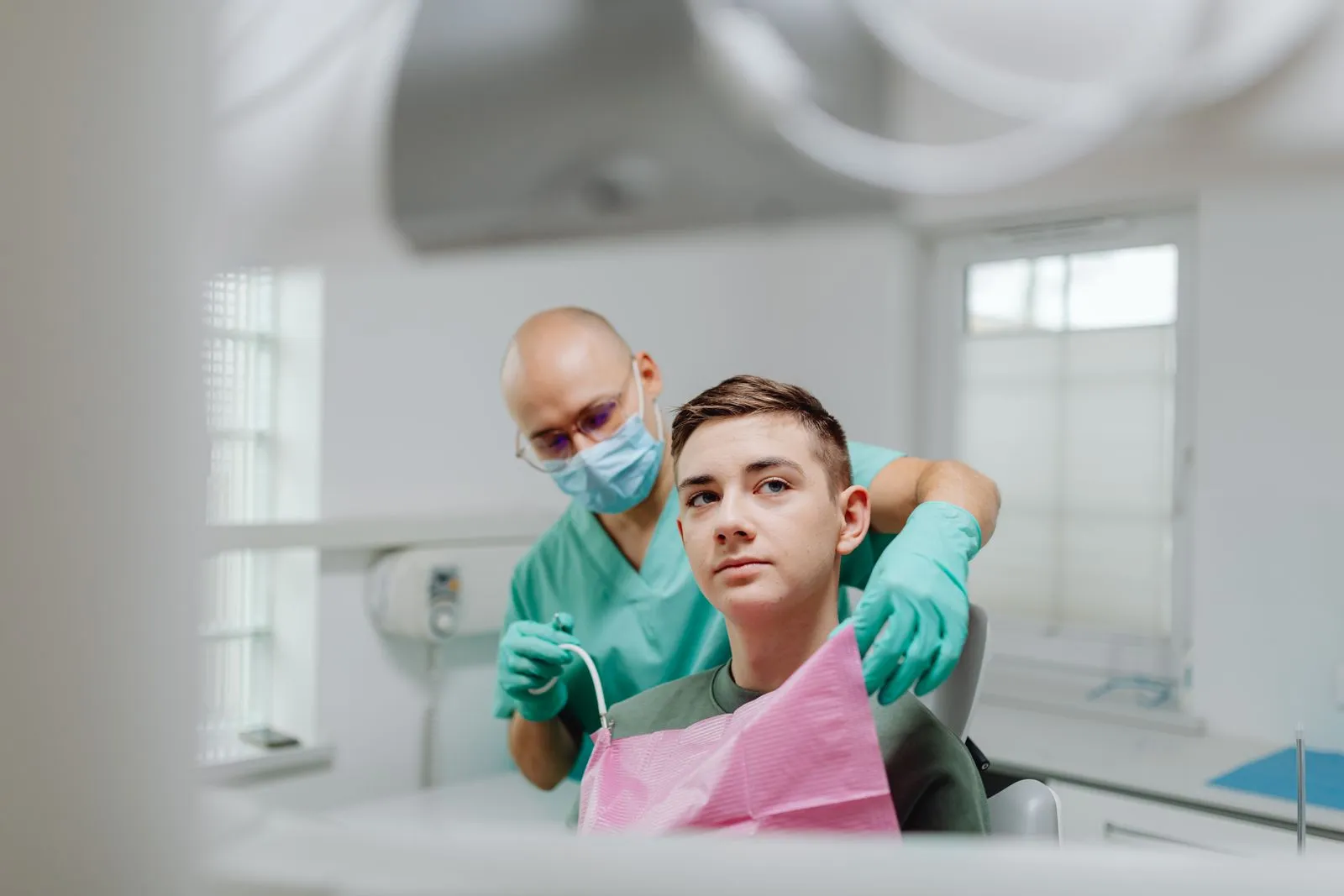
After a fall, a child’s mouth may look normal even when a tooth or surrounding tissue has been hurt. Check gently for changes in tooth color, position, comfort, and the way your child bites or eats. Some symptoms appear right away; others develop later. A careful check can help you decide whether to contact a pediatric dentist. If your child has trouble breathing or swallowing, uncontrolled bleeding, or a serious facial injury, seek emergency medical care.
Look for Color Changes
Compare the injured tooth with nearby teeth in good light. A tooth that turns gray, pink, yellow, or noticeably darker may have been affected by the impact. Discoloration can appear hours or days after a fall, so keep watching even if the tooth initially looks unchanged.
Color alone cannot show how serious an injury is, and a tooth may change color without causing pain. Contact a pediatric dentist if you notice a new or increasing color change. Share when the fall happened and whether the tooth has changed since then.
Check Tooth Position
Look for a tooth that appears loose, pushed inward or outward, longer or shorter than its neighbors, or out of line. Check whether a baby tooth or permanent tooth is missing, chipped, or visibly cracked. Don’t push or wiggle a tooth to test it; handling it can cause more discomfort.
A change in how the upper and lower teeth meet can also be a clue. If your child says the bite feels different or cannot close the mouth comfortably, arrange prompt dental advice. A tooth that has moved from its usual position needs timely assessment, even if your child seems calm.
Notice Pain and Sensitivity
Your child may report pain when biting, chewing, or touching a tooth. Watch for flinching with cold drinks or soft foods, holding the cheek, avoiding one side of the mouth, or becoming unusually reluctant to eat. Younger children may not explain what hurts, so changes in behavior can be useful clues.
Look for swelling or tenderness around the tooth, gums, lips, or jaw, as well as bleeding that returns. If pain is severe, swelling is increasing, or your child has a fever, seek prompt professional guidance. Do not put aspirin directly on the gums or tooth.
Keep Monitoring After the Fall
Even without an obvious change, check the area over the next several days for new discoloration, looseness, swelling, pain, or difficulty eating. Note when each symptom starts and whether it improves or worsens. A brief written record can help the dentist understand what has changed.
Contact a pediatric dentist when you suspect a tooth injury, rather than waiting for symptoms to become severe. If a permanent tooth has been knocked out, handle it by the crown, not the root, and seek emergency dental care immediately. For guidance in Sacramento, Sacramento Tooth Rescue can be reached at (916) 555-0195.
A change in color, position, bite, or comfort after a fall deserves attention, even if your child seems fine at first. Check gently, avoid disturbing injured teeth, and contact a pediatric dentist for advice about next steps. Early guidance can help you respond appropriately and keep track of any changes.